As a core component in modern measurement and control technology, pressure sensors convert pressure signals of gases or liquids into measurable electrical signals, playing an irreplaceable role in industrial automation, healthcare, transportation, environmental monitoring and many other fields. This paper systematically sorts out the main application scenarios of pressure sensors and deeply analyzes their functional value and technical characteristics in various industries.
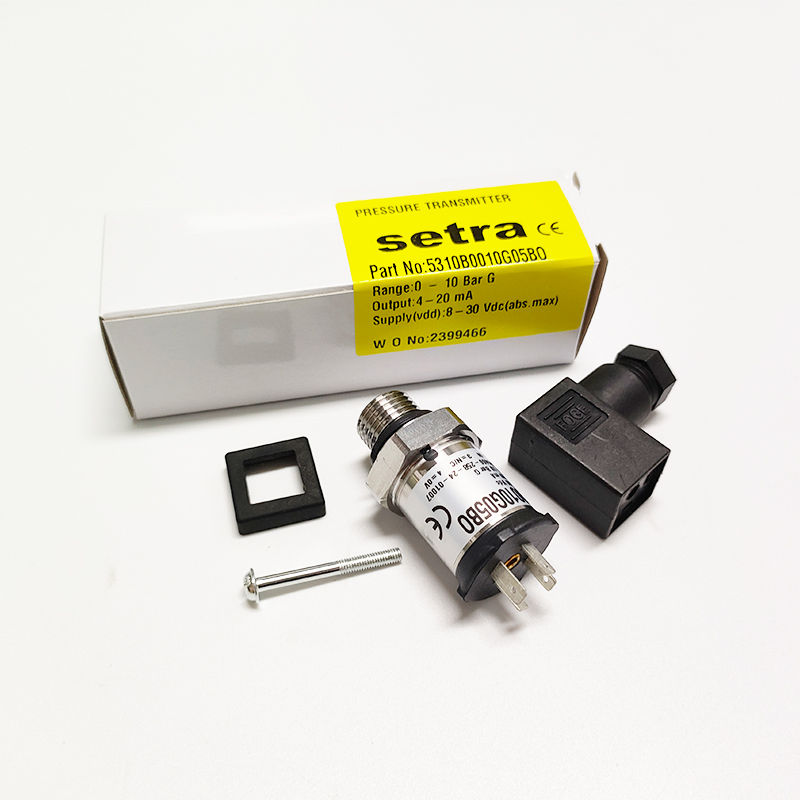
I. Industrial Automation and Process Control
The industrial sector is the most extensive application scenario of pressure sensors, covering petrochemicals, electric power, metallurgy, machinery manufacturing and many other sub-industries. In the petrochemical industry, pressure sensors undertake key tasks such as wellhead pressure monitoring, reactor pressure control and pipeline transmission pressure management, ensuring production safety and process stability in high-temperature and high-pressure environments. In the electric power industry, whether it is boiler drum pressure monitoring in thermal power generation, volute pressure control in hydropower, or hydraulic system monitoring in wind power, pressure sensors are essential sensing elements to guarantee stable energy output.
In machinery manufacturing, pressure sensors are used for mold clamping pressure control of injection molding machines, hydraulic system monitoring of CNC machine tools, press-fit force detection of assembly lines and other links, realizing process parameter optimization and product quality improvement through accurate pressure feedback. Industrial weighing systems also rely on pressure sensing technology to convert gravity signals into electrical signals, enabling online control of material flow and inventory management.
II. Extensive Applications in the Automotive Industry
Automobiles represent a major market for pressure sensors throughout the entire lifecycle of vehicle production and operation. In engine management systems, intake manifold pressure sensors and fuel pressure sensors monitor key parameters in real time to optimize combustion efficiency and emission performance. The Tire Pressure Monitoring System (TPMS) measures tire pressure in real time via built-in pressure sensors and issues timely alerts when pressure is abnormal, effectively reducing the risk of traffic accidents caused by tire problems.
The rapid development of new energy vehicles has further expanded the application space of pressure sensors. In the thermal management system of electric vehicles, MEMS pressure sensors monitor refrigerant pressure and battery pack pressure to ensure the safe and stable operation of the three-electric system. Hydraulic pressure monitoring in braking systems and refrigerant pressure control in air conditioning systems also rely on the precise measurement of pressure sensors.
III. Key Role in Healthcare
The medical industry imposes stringent requirements on the accuracy, miniaturization and biocompatibility of pressure sensors. In physiological parameter monitoring, piezoresistive sensors in electronic sphygmomanometers accurately measure cuff pressure changes to calculate systolic and diastolic blood pressure, with an accuracy of up to ±0.5 kPa. Ventilators rely on high-precision pressure sensors to precisely control air supply pressure, ensuring smooth breathing for patients and providing reliable support for intensive care.
More professional applications include intracranial pressure monitoring and intraocular pressure monitoring. Miniature piezoresistive sensors can be implanted intracranially to monitor intracranial pressure in real time (normal range: 0.7–2.0 kPa), preventing brain damage caused by intracranial hypertension. With the development of wearable devices, miniature pressure sensors are also used for real-time monitoring of heart rate changes and human motion status, promoting the development of personalized health management.
IV. Aerospace and High-End Equipment
The aerospace sector has extremely strict requirements for sensor reliability, stability and environmental adaptability. In aircraft systems, pressure sensors monitor hydraulic system pressure, fuel system pressure, environmental control system pressure and landing gear system pressure to ensure flight control and crew safety. Pressure monitoring of engine systems helps improve power performance and reliability.
In ground testing, wind tunnel experiments, engine test beds and other facilities rely on pressure sensors to obtain accurate test data. During the on-orbit operation of spacecraft, pressure monitoring of propulsion systems and temperature control systems needs to adapt to extreme space environments such as vacuum, high and low temperatures, and vibration, posing extremely high challenges to sensor technology.
V. Environmental Monitoring and Civil Applications
Pressure sensors play an important role in environmental monitoring and smart city construction. In the field of water treatment, from municipal water supply network pressure monitoring to aeration tank pressure control in wastewater treatment plants, pressure sensors ensure the safe supply and standard discharge of water resources. In meteorological monitoring, high-precision absolute pressure sensors are used for atmospheric pressure measurement, providing basic data for weather forecasting.
The popularization of smart homes has opened up new application scenarios for pressure sensors. Smart toilets adjust water flow by detecting water pressure, smart mattresses monitor sleep status through pressure sensing, and high-end refrigerators are equipped with sensors to detect refrigerant pressure for optimal cooling performance. These applications reflect the development trend of pressure sensors penetrating from industrial-grade to consumer-grade products.
VI. Technology Development Trends and Prospects
At present, pressure sensor technology is evolving toward miniaturization, intelligence, high precision and high reliability. The maturity of MEMS (Micro-Electro-Mechanical Systems) technology has greatly reduced sensor size and power consumption, enabling integration into space-constrained products such as wearable devices and medical implants. The trend of digitalization and wireless communication equips sensors with self-diagnosis, data processing and adaptive adjustment capabilities, allowing direct communication with cloud platforms or control systems to realize predictive maintenance and intelligent decision-making.
With the integrated development of Industry 4.0, the Internet of Things and artificial intelligence, pressure sensors will play an increasingly important role in emerging fields such as intelligent manufacturing, smart healthcare and autonomous driving. As the "nerve endings" perceiving the physical world, pressure sensors will continue to drive the digital transformation and intelligent upgrading of various industries, from safety monitoring in process industries to physiological parameter collection in precision medicine, from aerospace exploration in extreme environments to smart homes in daily life.


