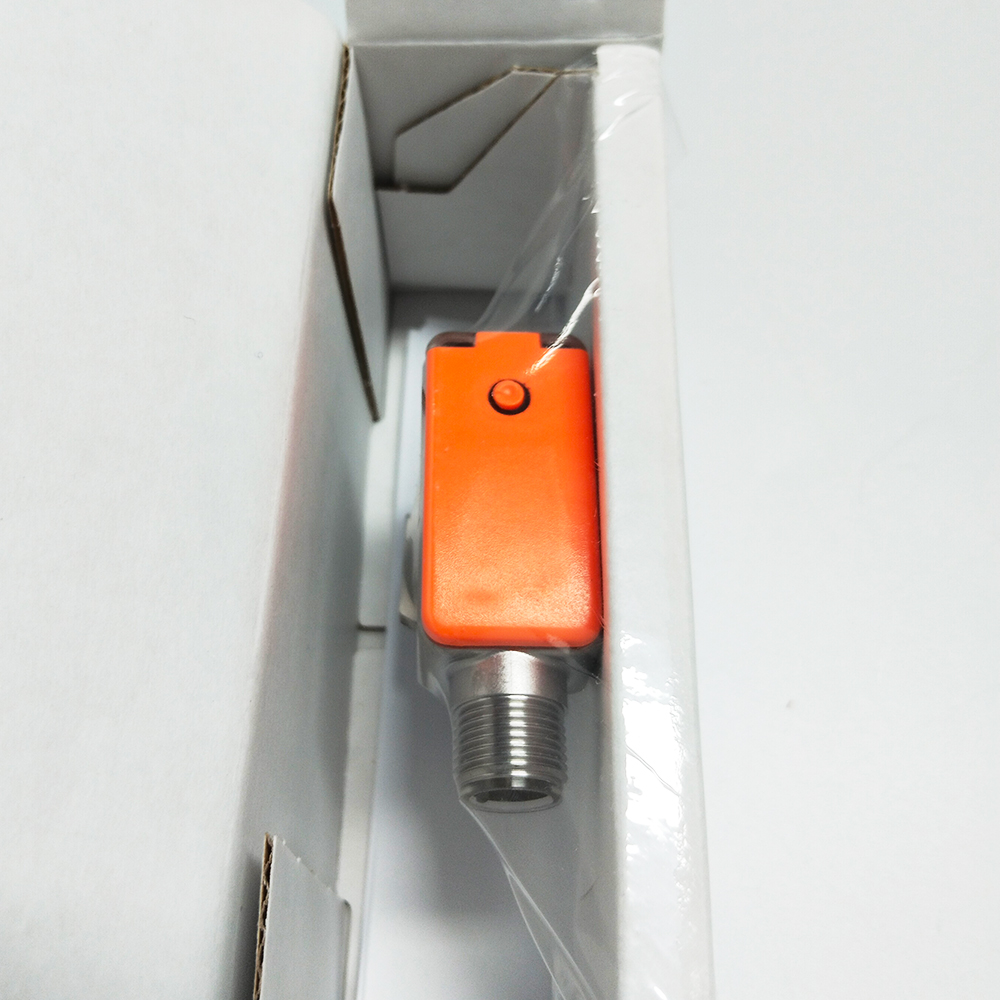
In numerous fields such as industrial automation, intelligent detection, smart home, and security monitoring, distance measurement, level detection, and obstacle recognition serve as the fundamental core links for equipment operation. Traditional contact detection devices, including mechanical limit switches, contact ranging sensors, and pressure induction detectors, require direct physical contact with measured objects to complete detection, resulting in inherent limitations in scenarios involving complex working conditions, special media, and precision equipment detection. Ultrasonic sensors adopt a non-contact detection principle based on acoustic wave reflection, which completely eliminates the restrictions of physical contact. With unique technical characteristics adaptable to various complex application scenarios, they have become one of the most widely used detection technologies at present. The core advantages of their non-contact detection are reflected in multiple dimensions including working condition adaptability, equipment protection, detection stability, cost and operation maintenance, and safety reliability, comprehensively compensating for the shortcomings of traditional detection technologies.
Superior working condition adaptability is the most core advantage of the non-contact detection of ultrasonic sensors. Traditional contact detection devices impose strict requirements on the morphology, material and state of measured objects, and are only applicable to hard, regular and static measured targets. They may fail to operate normally or even cause detection faults when facing flexible materials, liquid media, high-temperature vulnerable objects and loose particulate matters. Relying on the transmission and reception principle of high-frequency acoustic waves, ultrasonic sensors realize non-contact measurement and are compatible with almost all solid and liquid media. They can accurately complete ranging, level measurement and counting for powder and granular materials in industrial production, liquid media in water tanks and oil tanks, as well as flexible films and soft products in the packaging industry. Furthermore, this detection method is barely affected by environmental factors such as light, dust, smoke, rain and snow. Compared with laser and infrared sensors, it delivers higher stability in dim, dusty and humid industrial workshops and open outdoor environments, enabling all-weather stable operation. Its coverage of applicable scenarios far exceeds that of contact detection equipment, adapting to complex working conditions in industrial, outdoor and civil fields.
The non-contact detection mode effectively protects both measured equipment and sensors themselves, reducing equipment loss and extending service life. Contact detection collects signals through physical touch, extrusion and fitting, which generates continuous mechanical friction, collision and extrusion wear during long-term operation. On the one hand, repeated contact detection is likely to cause scratches, deformation, damage and displacement on precision parts, fragile components and flexible workpieces, resulting in product damage, workpiece scrapping and increased production losses. On the other hand, the mechanical contacts and induction components of contact sensors suffer from continuous wear, which easily leads to contact failure, mechanical stalling, component aging and other faults that require frequent maintenance and replacement. In contrast, ultrasonic sensors operate without physical contact or mechanical friction loss. They cause no damage to precision, fragile and flexible measured objects, and fundamentally eliminate mechanical wear of the sensors. In scenarios of high-speed assembly line detection and high-frequency reciprocating detection, the sensors can operate stably for a long time and greatly reduce equipment failure rates.
Stable detection accuracy and strong anti-interference capability are important technical advantages brought by non-contact detection. The detection accuracy of contact sensors is highly susceptible to mechanical wear, contact force, fitting angle and object deformation. With the aging and wear of mechanical components over time, detection errors increase continuously, leading to false detection, missed detection and data deviation. Ultrasonic sensors calculate distance and position data based on the time difference between acoustic wave transmission and reception, featuring independent and stable detection logic without variable interference caused by mechanical contact. Within the rated detection range, they can continuously output high-precision and highly consistent detection data, with short-distance ranging accuracy reaching the millimeter level, fully meeting the requirements of industrial precision detection and intelligent equipment precise control. In addition, the acoustic wave detection principle is not affected by the color and light transmittance of measured objects, enabling accurate detection of special materials such as black, transparent and reflective objects and making up for the defects of optical sensors.
Low cost and low operation and maintenance difficulty endow ultrasonic non-contact detection with high popularization value. In terms of procurement cost, ultrasonic sensors feature simple structure, high integration and low manufacturing cost, which are far more economical than LiDAR and visual detection equipment and suitable for large-scale popularization in small and medium-sized enterprises. In terms of operation and maintenance cost, contact sensors suffer from severe mechanical loss and require regular calibration and component replacement, resulting in complicated maintenance procedures and high consumable costs. Ultrasonic sensors have no mechanical wear and extremely low failure rate. They can operate in long-term maintenance-free state after installation and commissioning, and only need regular probe surface cleaning to maintain stable performance, which significantly reduces labor maintenance costs and equipment downtime. Meanwhile, the sensors are compact in size and flexible to install, adapting to narrow spaces and complex equipment structures with strong compatibility.
High safety and adaptability to special high-risk scenarios are unique advantages of non-contact detection. In high-risk industrial scenarios involving high temperature, high pressure, corrosion and flammable and explosive substances, physical contact of traditional detection may generate friction sparks and static electricity, or cause equipment damage due to contact with corrosive media, thereby triggering potential safety hazards. Ultrasonic non-contact detection involves no physical contact, static electricity generation or spark risk. The probe can be placed away from high-risk media and areas to safely complete liquid level detection of chemical storage tanks, material monitoring of high-temperature furnaces, and detection of flammable and explosive material conveying processes, effectively avoiding safety accidents and ensuring industrial production safety. In addition, in livelihood fields such as medical detection and smart homes, non-contact detection avoids contact pollution and cross-infection risks, achieving higher safety and hygiene.
In conclusion, the non-contact detection method of ultrasonic sensors exhibits prominent advantages in working condition adaptability, equipment protection, detection accuracy, operation and maintenance cost, and safety performance, thoroughly solving various pain points of traditional contact detection. With the characteristics of stability, high efficiency, low cost and high safety, this technology has been deeply applied in industrial automation, intelligent transportation, smart home, security monitoring, medical devices and many other fields. It serves as an indispensable core technology in modern intelligent detection and an important foundation for precise perception and stable operation of various intelligent equipment.


