As core components of modern automation and detection technology, photoelectric sensors have been widely applied in numerous fields including industry, healthcare, transportation, and security, owing to their distinctive performance advantages. The following systematic elaboration is presented from two dimensions: technical characteristics and multi-scenario applications.
I. Core Characteristics of Photoelectric Sensors
1. Non-Contact Detection Principle
Photoelectric sensors achieve detection by emitting light beams (infrared, visible light, or laser) and receiving reflected or transmitted optical signals, without requiring physical contact with the detected object. This characteristic eliminates mechanical wear, extends sensor service life, and makes them particularly suitable for industries with stringent cleanliness requirements such as semiconductor manufacturing and food processing.
2. High Response Speed and Precision
Modern photoelectric sensors can achieve response times at the microsecond or even nanosecond level, capable of accurately capturing positional information of high-speed moving objects. When paired with laser light sources, detection precision can reach the micrometer level, satisfying the rigorous demands of precision manufacturing and quality control.
3. Extensive Detection Adaptability
Through various detection modes including diffuse reflection, through-beam, and specular reflection, photoelectric sensors can adapt to target objects of different materials, colors, and transparency levels. Anti-interference designs (such as background suppression functions and polarizing filters) enable stable operation even in complex optical environments.
4. Environmental Tolerance
Industrial-grade photoelectric sensors generally possess IP67 and higher protection ratings, featuring high-temperature resistance, waterproof and dustproof capabilities, and electromagnetic interference immunity, ensuring reliability under harsh working conditions. As previously mentioned, German Leuze products demonstrate excellent adaptability to industrial environments in both their connecting cables and sensor bodies.
5. Digitalization and Intelligent Evolution
New-generation photoelectric sensors integrate IO-Link communication interfaces, supporting remote parameter configuration, condition monitoring, and predictive maintenance, aligning with Industry 4.0 development trends.
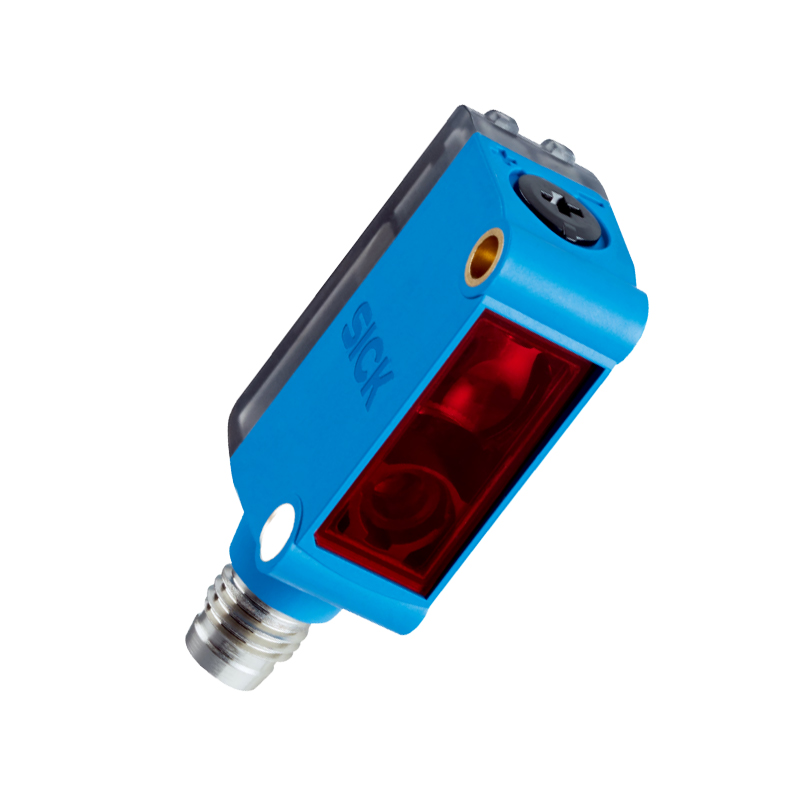
II. Multi-Domain Application Practices
1. Industrial Automation Manufacturing
In assembly lines, photoelectric sensors are utilized for workpiece presence detection, counting, dimensional measurement, and robotic positioning. Examples include welding station monitoring in automotive manufacturing and precision placement alignment of electronic components. When paired with power input modules such as the FN9260B-10-06, stable power filtering and EMC protection can be provided for sensor systems, ensuring continuous production line operation.
2. Logistics and Warehouse Management
In automated立体仓库 (automated storage and retrieval systems), photoelectric sensors enable shelf occupancy detection, conveyor belt cargo sorting, and AGV vehicle path navigation. Their long-distance detection capabilities (laser types can reach several tens of meters) are particularly suitable for large-scale warehouse space layouts.
3. Transportation Systems
In the intelligent transportation field, photoelectric sensors are employed for vehicle counting, axle load detection, red-light violation capture, and tunnel safety monitoring. Safety anti-pinch detection for metro platform screen doors and pantograph condition monitoring for high-speed railways also rely on highly reliable photoelectric sensing solutions.
4. Medical and Healthcare Equipment
In medical imaging equipment (CT, MRI), photoelectric sensors are responsible for precise positioning and motion control; counting and missing-pill detection in pharmaceutical packaging lines, as well as force-position feedback systems in surgical robots, all depend on high-precision photoelectric detection technology.
5. Security and Surveillance
Perimeter protection systems utilize infrared through-beam photoelectric sensors to construct invisible protection networks; intrusion detection in critical areas and human body sensing for automatic access control are all based on photoelectric principles. Their characteristics of strong concealment and low false alarm rates are highly favored in security engineering applications.
6. Consumer Electronics and Smart Home
Ambient light adjustment and automatic brightness sensing in smartphones, obstacle avoidance and path planning in robotic vacuum cleaners, and human body sensing switches in smart lighting—all these daily applications demonstrate the miniaturization and cost-effectiveness advantages of photoelectric sensors.
III. Future Development Trends
With the advancement of MEMS technology and optical integration, photoelectric sensors are evolving toward miniaturization, multi-parameter fusion (integrated detection of light, color, and distance), and AI edge computing integration. In emerging fields such as new energy (photovoltaic panel defect detection) and smart cities (manhole cover monitoring, trash bin overflow detection), photoelectric sensors will continue to play an irreplaceable role.
In conclusion, photoelectric sensors, with their core characteristics of non-contact operation, high precision, and rapid response, have established themselves as the technical cornerstone of modern automated detection. From traditional industry to emerging intelligent applications, their technological boundaries continue to expand, demonstrating strong vitality and broad development prospects.


