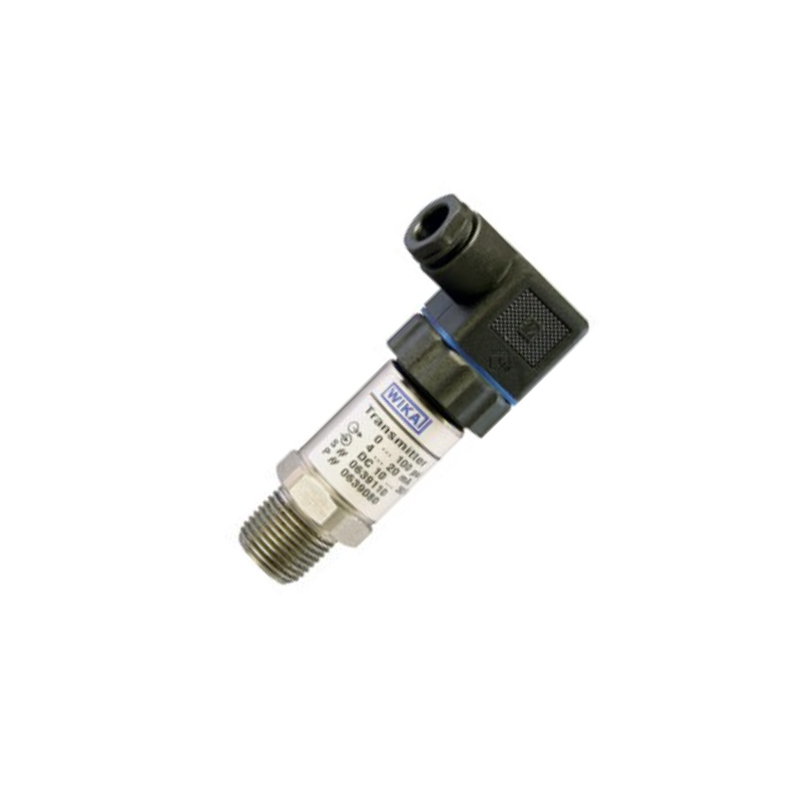
A pressure transducer is a precision device capable of converting physical pressure signals into measurable electrical signals. As one of the most critical sensing elements in the field of industrial automation, it functions like the "nerve endings" of modern industrial systems, continuously monitoring the pressure status of various fluid media in real time. It provides indispensable data support for equipment control, safety protection, and process optimization. From petrochemicals to medical equipment, from automotive manufacturing to aerospace, the application of pressure transducers permeates nearly all industrial scenarios involving fluid control.
Working Principles and Technological Evolution
The core technologies of modern pressure transducers are primarily based on three principles: the piezoresistive effect, the capacitive effect, and the piezoelectric effect. Among them, piezoresistive sensors utilize silicon-based or metal strain gauge technology. When pressure acts on the sensing element, the material's resistance value changes in a regular pattern, and the pressure value can be precisely measured through a Wheatstone bridge circuit. Thin-film sensors, on the other hand, use sputtering processes to form a strain-resistant layer on the surface of a stainless steel elastomer, combining high sensitivity with excellent long-term stability. With the advancement of MEMS (Micro-Electro-Mechanical Systems) technology, pressure transducers are rapidly evolving towards miniaturization and intelligence. Chip-level sensors have achieved millimeter-scale packaging and can integrate functional modules such as temperature compensation and digital signal processing.
Analysis of Typical Application Scenarios
In hydraulic and pneumatic systems, pressure transducers bear the core responsibility of system pressure monitoring. The hydraulic pump stations of construction machinery achieve load-sensing control through real-time pressure feedback, ensuring that the actuators output sufficient power while avoiding energy losses caused by overflow. Pressure monitoring in pneumatic automated production lines directly relates to the precision of clamping force and motion stability. Measurement accuracy within 0.5% FS has become a standard requirement for high-end equipment.
Pump and compressor control represents another important application field. Cavitation prevention in centrifugal pumps and pressure ratio regulation in screw compressors both rely on accurate pressure detection. Modern intelligent pump units, through multi-point pressure sensing networks combined with variable frequency drive technology, can achieve energy-saving operation modes that supply pressure on demand, offering energy savings of up to 30% or more compared to traditional constant-speed operation.
In terms of level monitoring, pressure transducers realize non-contact level detection by measuring the principle of hydrostatic pressure difference, making them particularly suitable for measuring corrosive media or sealed containers. In petrochemical tank farms, submersible level transmitters combined with pressure transducers form a dual-redundancy measurement system, ensuring the safe storage of hazardous media.
Pressure monitoring in the process industries is even more stringent. Pressure control in reactors is directly related to chemical reaction rates and product quality, while overpressure protection systems achieve emergency pressure relief through independently set safety pressure switches. Hygienic pressure transducers in the food and pharmaceutical industries adopt flush diaphragm designs to meet the stringent requirements of CIP (Clean-In-Place) and SIP (Sterilize-In-Place) cleaning and disinfection. Electropolishing processes with a surface roughness of Ra≤0.8μm effectively prevent microbial adhesion.
Technical Specifications and Selection Criteria
The selection of industrial-grade pressure transducers requires a comprehensive consideration of key parameters such as measurement range, accuracy class, output signal, process connection, and protection rating. The measurement range should cover 1.5 times the normal working pressure and include an overpressure protection margin. Accuracy indicators are usually expressed as a percentage of full scale (FS). Process control applications generally require 0.25%-0.5% FS, while metrology-level applications demand 0.1% FS or even higher precision.
Regarding output signals, the 4-20mA two-wire current signal, with its excellent anti-interference capability and long-distance transmission characteristics, remains the mainstream choice for industrial sites. With the proliferation of Industrial Ethernet, pressure transducers with digital communication protocols such as IO-Link and PROFINET are accelerating their penetration, enabling remote parameter configuration and predictive maintenance.
Environmental adaptability is another core consideration for industrial selection. All-stainless steel construction (316L or 17-4PH material) can resist the erosion of most corrosive media; shock-resistant designs must pass 50g mechanical shock tests; electromagnetic compatibility should comply with IEC 61000 standards to ensure stable operation in the vicinity of interference sources such as frequency converters and high-power motors. IP65/IP67 protection ratings can effectively prevent dust intrusion and short-term water immersion, while outdoor or washdown environments require an IP69K protection rating.
Industry Development Trends
Current pressure transducer technology is showing three major development directions: In terms of intelligence, the embedding of edge computing capabilities enables sensors to have self-diagnosis and self-adaptation functions, automatically correcting temperature drift and non-linear errors. In terms of wireless technology, the application of low-power Bluetooth, LoRa, and other technologies frees sensors from wiring constraints, making them particularly suitable for pressure monitoring on rotating equipment or mobile machinery. In terms of multi-parameter fusion, temperature-pressure integrated sensors and differential pressure-flow composite sensors obtain multi-dimensional information from a single measurement point, simplifying system architecture while improving data consistency.
As the data cornerstone of Industry 4.0, pressure transducers are evolving from simple measuring elements to intelligent sensing nodes. Their reliability, accuracy, and level of intelligence directly determine the decision-making quality of upper-level control systems. With the continuous breakthroughs in new materials and new processes, pressure transducers will achieve more precise measurements under more extreme operating conditions, providing solid support for the digital transformation of intelligent manufacturing and the process industries.
German WIKA Model S-20 Pressure Sensor, All Stainless Steel Construction, IP68/IP6K9K Protection
German WIKA Model 8644918 Pressure Sensor, Industrial Pressure Transmitter, Stainless Steel Housing
Swiss TRAFAG Model 8252,78,2517,3219,44,61 NSB02 Pressure Sensor, Overpressure Resistance
Swiss TRAFAG Model 8252.84.2517.01.19.34.44.61 Pressure Sensor, Overpressure Resistance
BCM Sensor Strain Gauge BPX-350-3.8AA-U-I-EW-(5.0x3.0) Pressure Sensor
BCM Sensor Strain Gauge BPX-350-5.0AA-U-I-EW-(6.0x4.0) Pressure Sensor
BCM SENSOR Strain Gauge BPY-1000-3.8AA-U-I-RL-(5.0x3.0) Pressure Sensor
German SICK Pressure Sensor Model PBS2-RB400SG2SS0NMA0Z, Order No. 6073466
Belgian BCM SENSOR Strain Gauge SE206-500-18mV/V-0.5%fs-SP-X Pressure Sensor
American Honeywell Pressure Sensor Model PX2AG2XX010BSCHX
American GEMS Pressure Sensor Model 3200B0250S05ER00, Adaptable to Extreme Pressure Spikes
American GEMS Pressure Sensor Model 3200B0400S05ER00, Rugged Diaphragm
American GEMS Pressure Sensor Model 3200B500PG02BR00, High Pressure Resistance, Multiple Outputs
American GEMS Pressure Sensor Model 3200B0250S05GRCP, Multiple Electrical Outputs
American GEMS Pressure Sensor Model 3200B0400S058R00®, Sputtered Thin Film Technology
American GEMS Pressure Sensor Model 3100H300PG028000, High Pressure Resistance
American Barksdale Industrial Pressure Sensor Model BT5-T4-16BG-P9-C
American SSI Pressure Sensor Model P51-75-A-E-I36-5V-000-000
American Setra Standard Industrial Pressure Sensor Model 5310B0250S05EO
In Stock American Setra Pressure Sensor Model 5310B0010G05BO, Standard Industrial
American Setra Pressure Sensor Vacuum Capacitance Pressure Gauge 730G010TAN12CT1A
Pressure Sensor with Display PN2099 PN-1-1BRER14-MFRKG/US/ /V
Flush Pressure Sensor PM1608 PM-25BREA01-E-ZVG/US
German SICK Pressure Sensor Model PAC50-BGD, Order No. 1062961
In Stock American GEMS Model 3200B0250S05BR00 Pressure Transmitter Pressure Sensor
American Setra Standard Industrial Pressure Sensor Model 5310B0250S05E0
American Setra Industrial Pressure Sensor Model 2061010BG2M11068YN
American Barksdale Pressure Sensor Pressure Switch Model 625T4-16-Z23
American Setra Pressure Sensor Vacuum Capacitance Pressure Gauge 730G010TAN12CD7A
American Setra Pressure Sensor High Precision Capacitance Pressure Gauge 730G020TAN22CT1A


